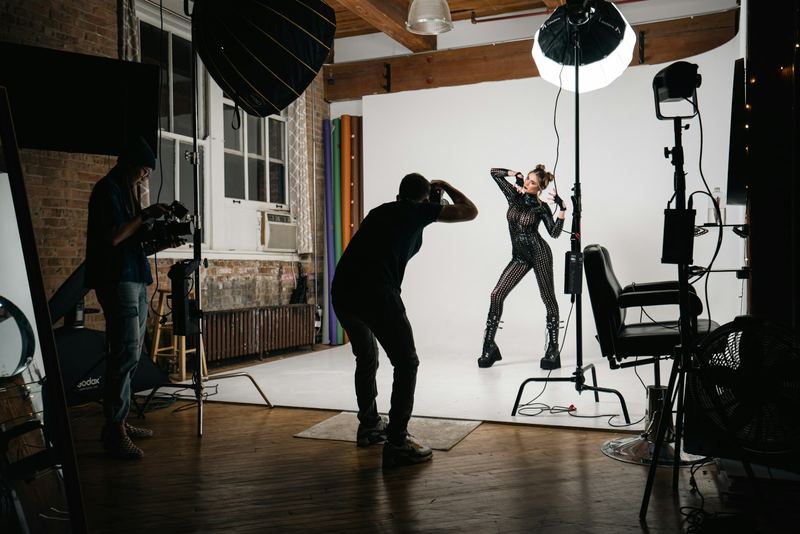
A client asks for "all the rights" to their logo. Another wants to reuse your gala photos in a billboard campaign, two years later. An agency takes your jingle for a TV ad aired in three countries. Each time, the same question: what exactly did you sell?
A copyright assignment answers that question in writing. Done well, it protects your client, who knows what they can do, and it protects you, because you keep control of everything else. Without one, the door is open to uses you never billed for.
The framework: who owns the work?
As soon as you create an original work (a logo, a photo, an edit, a composition), you are its author. No registration needed: the right is born with the creation. In Cameroon, this is governed by Law No. 2000/011 of 19 December 2000 on copyright and neighbouring rights. In OAPI member states, the Bangui Agreement also sets out common principles. The OHADA Uniform Acts, for their part, cover commercial contracts and company law, not copyright.
Key point: paying for a job does not automatically transfer the rights. Your client pays for your work. For them to exploit the work freely, they need an assignment, ideally written and detailed.
Moral rights and economic rights
Copyright is made up of two families of rights:
- Moral rights: being recognized as the author, deciding on disclosure, protecting the integrity of the work. They stay attached to you. In most French-speaking countries, they cannot be sold and never expire.
- Economic rights: the right to exploit the work and earn money from it. These are the ones you assign, in whole or in part, for a set duration and territory.
Even after a full assignment, you can in principle stay credited and refuse a gross distortion of your work. On the other hand, you can no longer sell the same work to another client if the assignment is exclusive.
| Right | What it lets the client do |
|---|---|
| Reproduction | Print, copy and duplicate the work on any medium |
| Public display | Broadcast it, display it, publish it online, screen it |
| Adaptation | Modify it, crop it, create variations, translate it |
| Commercial use | Use it to sell products or services, including on merchandise |
The five clauses that make an assignment solid
A vague assignment gets interpreted narrowly, or challenged. Here are the five elements to put in black and white.
- Scope: which rights exactly (reproduction, display, adaptation) and on which work. Write "the Kribi Fresh logotype, colour and monochrome versions, delivered on 3 October", not "the work carried out".
- Purpose: for which uses and on which media. Packaging, website, social media, billboards, television, promotional items. What isn't listed isn't assigned.
- Duration: 1 year, 3 years, 10 years, or the full legal term of protection. In Cameroon, economic rights last for the author's lifetime plus 50 years after their death; check the rule in the country concerned.
- Territory: one country, the CEMAC or WAEMU zone, Africa, the world. Since the internet is global by nature, state whether online distribution is included.
- Price: a flat fee, an amount separate from the creation fee, or a percentage of revenue. A free assignment must be stated as free.
What isn't written in the assignment isn't assigned: that's your best protection, as long as you write precisely.
Add two points that are often forgotten: the effective date (ideally upon full payment) and whether the client may sub-assign the rights to a third party, such as an agency or a distributor.
Assignment or licence: choosing well
The two are often confused. The difference is simple:
- An assignment transfers the rights to the client. They become the rights holder for the agreed duration and territory. It suits a logo or a visual identity the client must be able to use without depending on you.
- A licence is permission to use the work, with no transfer of ownership. You remain the rights holder. It suits photos, music and videos that you can reuse or resell elsewhere.
Exclusive or non-exclusive
An assignment or a licence can be exclusive (you commit not to grant the same work to anyone else) or non-exclusive (you can offer it to other clients). Exclusivity has value: it comes at a price. A logo is exclusive by nature. A landscape photo of Limbe sold to a travel agency can easily remain non-exclusive.
| Situation | Recommended approach | Why |
|---|---|---|
| Logo, visual identity | Exclusive assignment, long duration | The client must be the only one using their brand |
| Event photos | Licence or assignment limited to communication uses | You keep your archives and your portfolio |
| Advertising music | Limited sync licence (duration, media, countries) | The ad has a lifespan, the music can be used again |
| Social media content | Assignment limited to the named platforms, 1 to 2 years | Prevents reuse in an unplanned paid campaign |
| Personal image bank | Non-exclusive licence | The same photo can be sold several times |
How much should you charge for an assignment?
There is no official rate card. The logic is the same everywhere: the broader the assignment, the more it is worth. Three common methods:
- A flat fee separate from the creation fee, adjusted to the scope. The easiest for the client to read.
- A percentage of the creation fee, which rises with duration, territory and exclusivity.
- Royalties based on revenue, used mainly in music, publishing or merchandise.
Always separate the "creation" line from the "rights assignment" line on your quote. The client sees what they are paying for, and you can negotiate one without touching the other. On the tax side, the assignment appears on your invoice like everything else; if you are registered for VAT, VAT (19.25% in Cameroon) applies according to your tax regime. Have your accountant confirm this.
Worked example: a logo in Douala
Aminata Ndiaye, a graphic designer in Douala, creates the identity for Kribi Fresh, a juice brand. She offers three levels on her quote:
| Option | Scope | Creation | Assignment | Total excl. VAT |
|---|---|---|---|---|
| A | Cameroon, 3 years, web and packaging | 450,000 FCFA | 100,000 FCFA | 550,000 FCFA |
| B | CEMAC zone, 10 years, all media | 450,000 FCFA | 250,000 FCFA | 700,000 FCFA |
| C | Worldwide, legal term, exclusive, all media | 450,000 FCFA | 450,000 FCFA | 900,000 FCFA |
The client chooses B. For an international client, 700,000 FCFA is about €1,067 (fixed rate: €1 = 655.957 FCFA). These amounts are an example: adapt them to your market and your client.
Practical cases
An SME's logo
Here, a broad assignment makes sense. Plan for: exclusive assignment, adaptation rights (to roll it out on signage, vehicles, uniforms), long duration, a territory that matches the client's ambitions. Keep your right to show the logo in your portfolio in the clause. Only hand over the source files (vector files, fonts, brand guide) once you've been paid in full.
Event photos
Kouadio Yao, a photographer in Abidjan, covers a product launch for a bank. The bank wants to publish the photos on its social media and in its annual report. Kouadio grants a 2-year non-exclusive licence for internal and corporate communication, in Côte d'Ivoire and online. If the bank later wants a photo for a billboard campaign, it comes back to him, for an extra fee.
Be careful: your assignment covers your rights as a photographer. It does not cover the image rights of the people photographed. For advertising use, the client must get permission from any recognizable people. Write this into the contract.
Music for an ad
Moussa Diop, a composer in Dakar, writes a 30-second jingle for a telecom operator. This is synchronization: pairing music with images. The licence must specify the media (TV, radio, web), the countries, the airing period and the number of versions (30 s, 15 s, 6 s). Two more points matter in music:
- If you are a member of a collective management society (SOCAM in Cameroon, BURIDA in Côte d'Ivoire, SODAV in Senegal), check what you have entrusted to it before you sign.
- If the track uses samples or other artists' vocals, you must hold their permissions: otherwise, you cannot assign them.
Social media content
Grâce Mbina, a videographer in Libreville, produces 12 short videos a month for a cosmetics brand. The assignment covers Instagram, TikTok and Facebook, for 18 months, for organic posting. If the brand wants to boost a video (paid advertising) or air it on television, that is an additional use, to be billed separately. Also state what happens to the raw footage: usually, it stays with you.
Sample clauses to copy
Adapt the items in square brackets to each project.
Subject of the assignment "The Assignor assigns to the Assignee, who accepts, the economic rights of copyright in the following work: [precise description], delivered on [date], within the limits defined below."
Rights assigned and purpose "The rights of reproduction, public display and adaptation are assigned for the following uses: [packaging, website, social media, billboards]. Any other use, in particular [television, paid advertising, merchandise], shall be subject to a separate written agreement and separate payment."
Duration and territory "This assignment is granted for a period of [X] years from its effective date, for the following territory: [country or zone]. Online distribution is [included / excluded]."
Price and effective date "In consideration, the Assignee shall pay the Assignor the sum of [amount] FCFA excluding VAT. The assignment takes effect on the date of full payment of the service and of the assignment price."
Exclusivity "The assignment is [exclusive / non-exclusive]. [If exclusive: the Assignor undertakes not to assign or license the same rights to any third party for the duration of the assignment.]"
Credit and portfolio "The Assignor retains the right to present the work in their portfolio and promotional materials. The Assignee shall credit the Assignor's name where the use allows."
Common traps
- Assigning "all rights, forever, worldwide" for the price of a simple creation. If the client wants everything, they pay for everything.
- Forgetting the purpose: without a list of uses, the client may think anything goes, and you'll struggle to bill a new use.
- Handing over the source files before payment: you lose your main leverage if the invoice drags on. See our guide on how to chase an unpaid invoice.
- Assigning future works in bulk ("all creations to come"): in many legal systems, this kind of clause is fragile, or even void. Do one assignment per deliverable or per defined batch.
- Overlooking third-party elements: licensed fonts, stock photos, samples. You can only assign what belongs to you.
- Settling everything by voice note: an agreement on WhatsApp is better than nothing, but it is hard to prove. Always sum up the agreement in a signed document.
Checklist before you send your assignment
- The work is described precisely, with the delivery date.
- Every right assigned is listed, with its uses and media.
- Duration, territory and whether the internet is included are written down.
- The assignment price is separate or explicitly included.
- Exclusivity is specified, along with whether sub-assignment is allowed.
- The effective date is tied to full payment.
- Your right to portfolio use and credit is mentioned.
- Third-party elements (fonts, images, samples) are covered.
In short
- Paying for a job does not transfer the rights: you need a written assignment.
- You assign the economic rights; moral rights stay with you.
- Scope, purpose, duration, territory and price must be written down.
- A licence is often enough for photos, music and video.
- Separate creation and assignment on the quote, and offer several levels.
- Tie the effective date to full payment.
With Coolcolab
In the contracts editor, choose the "Copyright assignment" template: you tick the rights assigned, the uses, the duration, the territory, the exclusivity and the price, and the document is generated in your brand colours. Your client reads it and signs it online from their client portal, with no printing or scanning. On your quotes and invoices, you add the assignment as a line separate from the creation fee. The assignment is filed in the collab folder, next to the brief, the quote and the deliverables: if the client comes back two years later for a new use, you find in seconds what was assigned, and what wasn't.